
Agriculture Conference Interpreting: Bridging the Gap Between Farmers and Diplomats in the Mekong Delta
Author: Khang Nguyen – Lead Interpreter, AKT Translation (25+ years of conference interpreting experience)
Executive Summary (TL;DR): In the high-stakes dialogue of climate change, a conference interpreter does more than translate words; they translate survival. At the recent "Salty Soils, Shared Solutions" summit in Can Tho, AKT Translation facilitated a critical exchange between Dutch water management experts and Vietnamese farmers. This article explores the unique challenges of interpreting for a "standing" panel discussion and provides a deep dive into the specialized terminology of AgriTech 4.0 and salinity intrusion.
What is Specialized Agriculture Interpreting?
It is a highly technical branch of conference interpreting that combines environmental science, hydrology, and diplomatic protocol. An expert agriculture interpreter must accurately convey complex concepts like aquifer storage and marketable yield while navigating the emotional nuances of local farmers facing climate-driven livelihoods.
1. The "Standing" Panel: When the Format Dictates the Interpretation Pace
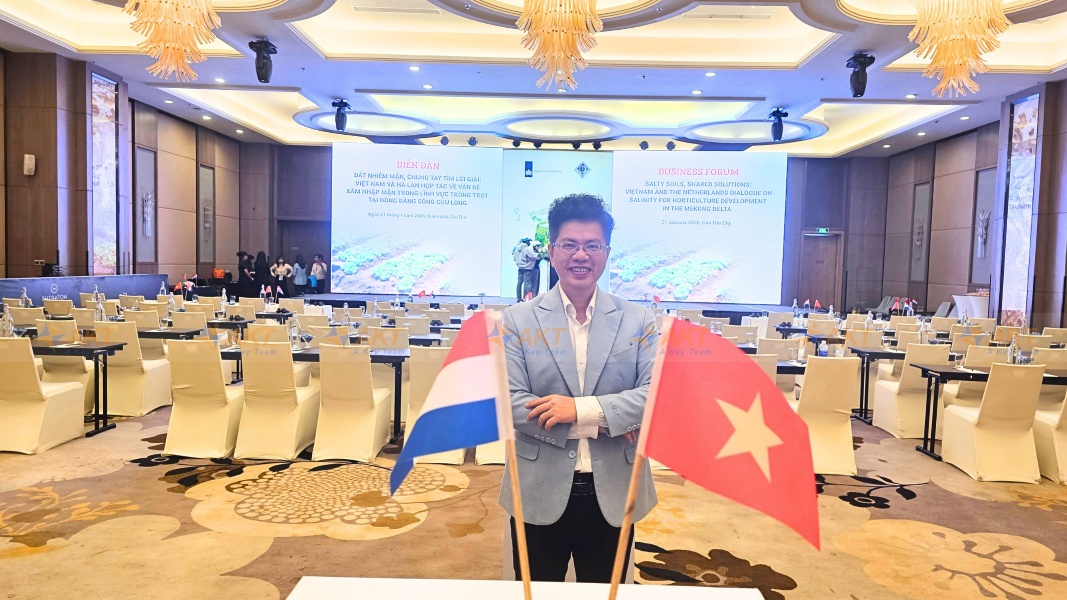
Can Tho, January 2026. At the Sheraton Can Tho, the Hậu River flows with a silent, seasonal anxiety: the saltwater is returning. Inside, a historic dialogue unfolds between Vietnam and the Netherlands—the world's masters of water management.
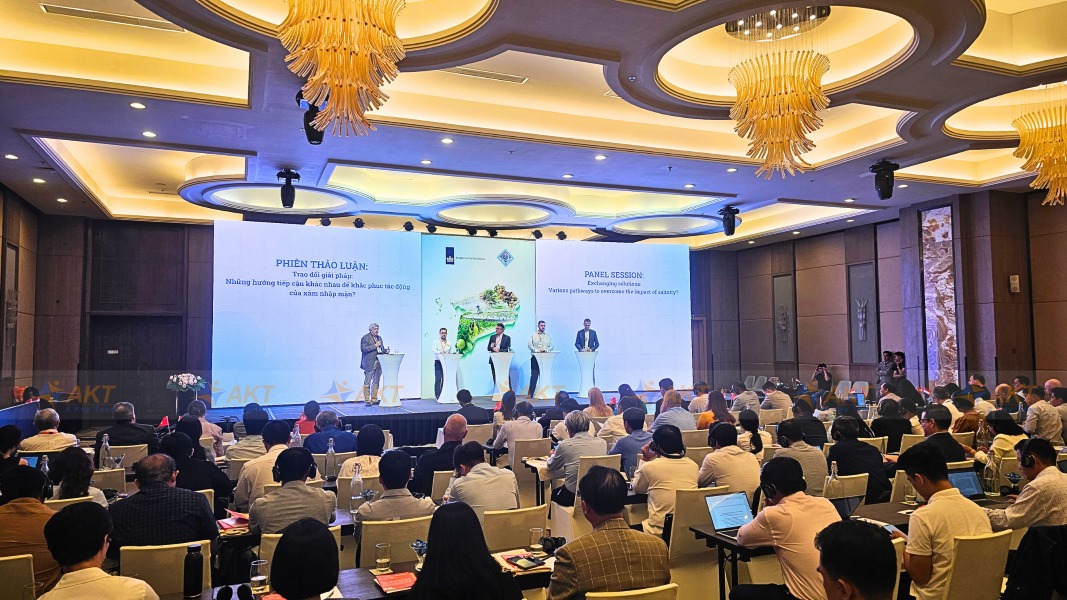
The organizers made a bold move for the Panel Discussion: No sofas. No desks. Only microphones and speakers standing face-to-face for 60 minutes. From Rainmaker Holland representatives to the Vietnam Farmers' Union, everyone stood on equal footing.
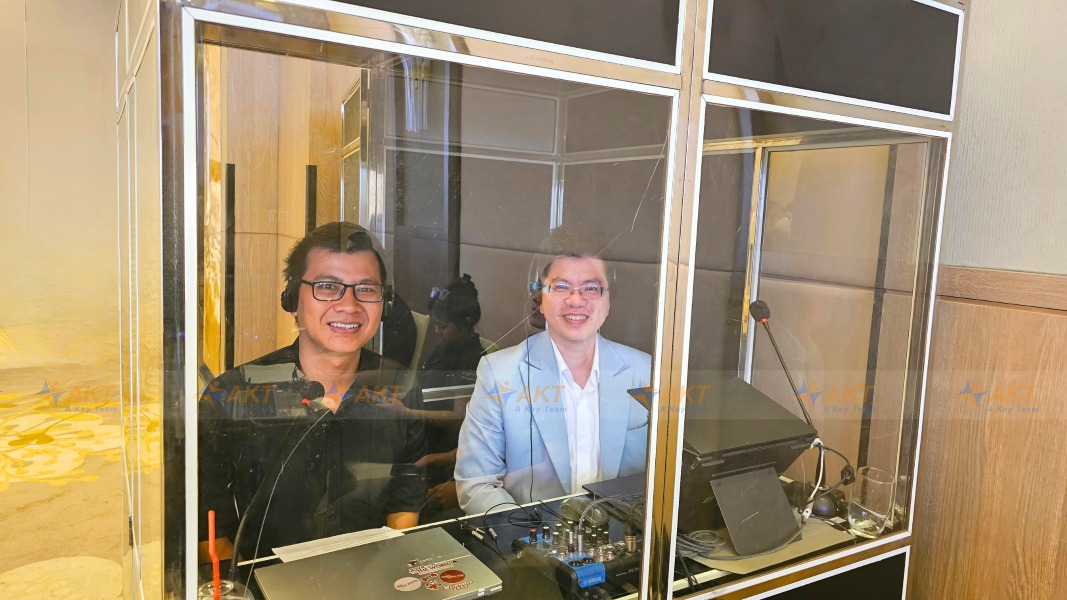
From the booth, I initially wondered if this "standing" format would tire the speakers. The result was the exact opposite. The posture broke the invisible barriers between academic scientists and field experts, creating an incredibly dynamic atmosphere.
However, for a simultaneous interpreter, this meant a significantly faster pace. Speakers used more body language and interacted naturally with LED screens, requiring me to "jump digits" (real-time mental processing) constantly to keep up with the rapid-fire rebuttals and laughter. It was a marathon of the mind, proving that a simple change in format can ignite engagement—but it requires an interpreter who can match that energy.
2. Decoding AgriTech 4.0
The soil of the Netherlands and Vietnam differ, as do their technological mindsets. Here are three critical terms from the event and how AKT ensures they resonate with local stakeholders:
-
Salinity Intrusion vs. Soil Salinity
-
The Pitfall: Often translated generally as "salt contamination."
-
The AKT Standard: Xâm nhập mặn (Salinity Intrusion).
-
The Context: This is a dynamic phenomenon where seawater enters river mouths due to tides or climate change. It differs from Soil Salinity (Đất mặn), which is a static property of the land. Distinguishing the cause from the effect is vital for implementing the correct solution (prevention vs. remediation).
-
Renewable Decentralized Water Production
-
The Pitfall: A literal translation sounds overly academic and confusing to farmers.
-
The AKT Standard: Sản xuất nước phi tập trung bằng năng lượng tái tạo.
-
The Context: This technology uses solar or wind energy to filter brackish water directly at the farm level (decentralized) rather than relying on massive, centralized plants. Emphasizing "autonomy" is key for remote Mekong Delta areas.
-
Yield (in High-Tech Horticulture)
-
The Pitfall: Often mistranslated as raw "output" (quantity).
-
The AKT Standard: Năng suất thương phẩm / Chất lượng thu hoạch.
-
The Context: In Climate-Smart Agriculture, "increasing yield" isn't just about tons per hectare; it's about the percentage of crops meeting export standards (marketable yield). If the fruit is abundant but unsellable, the farmer still loses.
3. When Diplomats Tell Stories
The most moving moment didn't come from a technical chart, but from the opening speech by Consul General Raïssa Marteaux.
Moving away from sterile diplomatic scripts, she shared her childhood memories of the Netherlands—of a small garden and a young girl who wanted to be an inventor because Dutch food felt "bland" (due to soil mineral/salt balances).
That story transformed her from an official into an empathetic friend. My task in the booth was to shift my tone from administrative to narrative—warm, sincere, and human. Conversely, when the Vietnam Farmers' Union representative spoke of the heartbreak of "losing everything to a bad harvest," I had to pivot to a tone of urgency and distress.
This is why the Consulate booked AKT Translation two months in advance. They don't just need a voice; they need a "chameleon" who can bridge two cultures and two distinct emotional frequencies.
4. 25 Years of Trust from Diplomatic Missions
Why do the Dutch Consulate, FAO, and international NGOs repeatedly choose AKT for multi-stakeholder events?
Because we don't just interpret language; we interpret Context.
- We speak Diplomacy to ensure no guest is slighted.
- We speak Technology (e.g., Aquifer Storage and Recovery - ASR) to ensure zero errors in knowledge transfer.
- We speak the Language of the Farmer to ensure million-dollar solutions actually impact lives.
The event closed with firm handshakes and genuine smiles. For an interpreter, that is the ultimate "yield."
5. FAQ: Agriculture & Climate Conference Interpreting
What preparation is required for an agriculture interpreter? Beyond vocabulary, the interpreter must research local soil conditions, crop cycles, and the specific AgriTech solutions being introduced. At AKT, we build a custom Glossary for every event to ensure absolute precision.
How can I hire a cabin interpreter in Can Tho? AKT provides full-package mobile simultaneous interpreting services in Can Tho and throughout the Mekong Delta. Hiring an expert team with local logistical knowledge saves significant transport costs while maintaining international standards.
How are the costs for specialized agriculture interpreting calculated? Pricing depends on the language pair, the technical depth (e.g., hydrology vs. general trade), duration, and location. For high-level summits like the Vietnam-Netherlands dialogue, the fee reflects the expert-level seniority required.
Planning an international summit in the Mekong Delta? Don't let language barriers limit your opportunities for growth. Let AKT be the bridge that ensures your strategic message is heard and felt.
AKT Translation – Trusted Partner of Consulates and International Organizations.
- Cultural & Technical Expertise
- Modern Cabin Equipment
- 25 Years of Proven Excellence
====================
Book AKT’s seasoned interpreters for your events or contact for more information via
- Hotline: 0888170069
- Email: info@phiendichvien.com
- Facebook fanpage: Phien Dich Vien by AKT
>> Watch our latest events on Youtube: Phien Dich Vien by AKT
-
 Specialist InterpretingView MoreAs senior managers, we know what attributes our clients are looking for in an interpreter – a good translator with expertise who can process ideas from one language to another professionally. A strong interpreter adds value to any event.
 -
 TranslationView MoreOver the years, we have worked with thousands of high-profile customers, many of whom are impressed by our excellent services.
 -
 TrainingView MoreThe way we teach is characterized by putting trainees at the forefront of the learning process. Our curriculum is open to adaptability and development of personal skills in an approach best described as "From conferences to classrooms".