
Financial Conference Interpreting: Navigating Diverse Accents and High-Stakes Macroeconomics
Successful financial conference interpreting requires more than linguistic fluency; it demands a deep comprehension of global market mechanics and strategic preparation. By decoding complex regional accents and technical jargon, elite interpreters ensure seamless communication for institutional investors and multinational corporations.
"We have speakers from Taiwan, South Korea, and Thailand. The accents will be incredibly diverse. Can your team pull this off?"
That was the anxious question from the organizers before the high-profile "From Asia to Vietnam" conference, marking the 25th anniversary of Yuanta Securities. The stakes were exceptionally high, with representatives from the State Securities Commission (SSC), HOSE, and VSD in attendance to discuss critical shifts like the KRX system implementation and MSCI market reclassification.
As a lead interpreter with 25 years of experience, I know that success in the booth isn't just about phonetic accuracy. It’s about observing the market through a shared financial lens. When an interpreter grasps the core mechanics of an investment strategy, their brain automatically outputs razor-sharp terminology, regardless of whether the speaker has a Seoul, Taipei, or Bangkok twang.
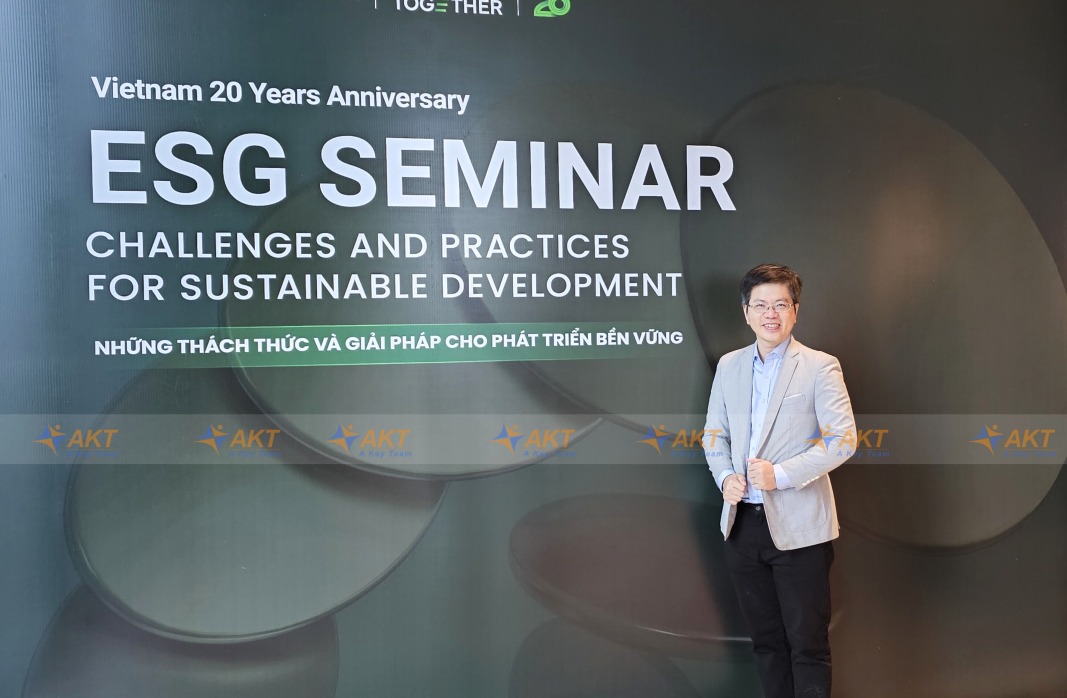
Beyond Words: Decoding Global Financial Shifts
To maintain the flow during a top-tier investment forum, professionals must transition from "hearing words" to "anticipating concepts." During this event, experts discussed the impact of global trade decoupling and the potential for Vietnam to achieve Emerging Market status.
Maintaining precision across these topics requires a specialized understanding of regional financial instruments. Below is how we localized critical concepts for the Vietnamese investment community:
| Financial Concept | Industry Meaning | Strategic Transcreation (English to Vietnamese) |
| MSCI Reclassification | The process where MSCI evaluates and upgrades a market's status. | Nâng hạng thị trường – Captures the ultimate goal of the local investment community rather than a literal "reclassification." |
| NVDRs (Non-Voting Depository Receipts) | A Thai financial instrument for foreign investors to bypass ownership limits. | Chứng chỉ lưu ký không có quyền biểu quyết – A technical localization essential for understanding regional legal workarounds. |
| Dragon Transformation | A phase of explosive growth in market scale and institutionalization. | Chiến lược "Hóa Rồng" – Retains the powerful imagery that resonates with Asian corporate culture and economic leaps. |
Strategic Crisis Management: The "Monitor" Advantage
The ultimate test of a financial interpreter occurs during the live Panel Discussion. At the Yuanta conference, global experts fielded rapid-fire questions regarding global tariffs and market volatility.
The physical distance between the interpreting booth and the main stage at the New World Hotel created a potential blind spot. Interpreting a chaotic, multi-way bilingual cross-fire relying solely on audio is a massive risk. AKT Translation proactively eliminated this by installing an internal monitoring system directly inside the booth.
By observing the live feed, our team read every subtle non-verbal cue—a nod, a hesitation, or a micro-expression—from the executives. We solved the physical barrier first, which streamlined the linguistic delivery. The result was a flawless dialogue that landed with absolute precision, even during the most intense Q&A sessions.
Key Takeaways for High-Stakes Events
- Deep Sector Insight: Technical fluency is the baseline; understanding the logic of financial regulators like the SSC and HOSE is what ensures accuracy.
- Proactive Technical Setup: Utilizing internal monitors allows interpreters to capture vital non-verbal context, which is crucial for rapid-fire panels.
- Dynamic Localization: Effective translation requires resonant terminology—avoiding rigid word-for-word interpretation to maintain the speaker's authority.
Frequently Asked Questions
How do interpreters handle heavy regional accents in finance?
Professional interpreters overcome accent barriers by mastering the subject matter. When the interpreter is familiar with the speaker's slides and the macroeconomic frameworks discussed, they can anticipate the terminology, effectively neutralizing any phonetic challenges.
What is the standard preparation for a major investment conference?
Preparation is 80% of the outcome. We analyze speaker profiles, internalize industry-specific jargon, and finalize technical logistics like visual monitors 3 to 5 days before the event to ensure zero-fail execution.
How does AKT ensure quality for multinational corporate events?
We combine decades of experience with a "boots-on-the-ground" approach, working closely with event agencies and corporate leaders to align our linguistic strategy with the brand's core message.
Are you orchestrating a high-stakes financial conference and require flawless bilingual communication?
AKT Translation partners with leading corporations and FDI enterprises to deliver unparalleled linguistic precision
====================
Book AKT’s seasoned interpreters for your events or contact for more information via
- Hotline: 0888170069
- Email: info@phiendichvien.com
- Facebook fanpage: Phien Dich Vien by AKT
>> Watch our latest events on Youtube: Phien Dich Vien by AKT
-
 Specialist InterpretingView MoreAs senior managers, we know what attributes our clients are looking for in an interpreter – a good translator with expertise who can process ideas from one language to another professionally. A strong interpreter adds value to any event.
 -
 TranslationView MoreOver the years, we have worked with thousands of high-profile customers, many of whom are impressed by our excellent services.
 -
 TrainingView MoreThe way we teach is characterized by putting trainees at the forefront of the learning process. Our curriculum is open to adaptability and development of personal skills in an approach best described as "From conferences to classrooms".